



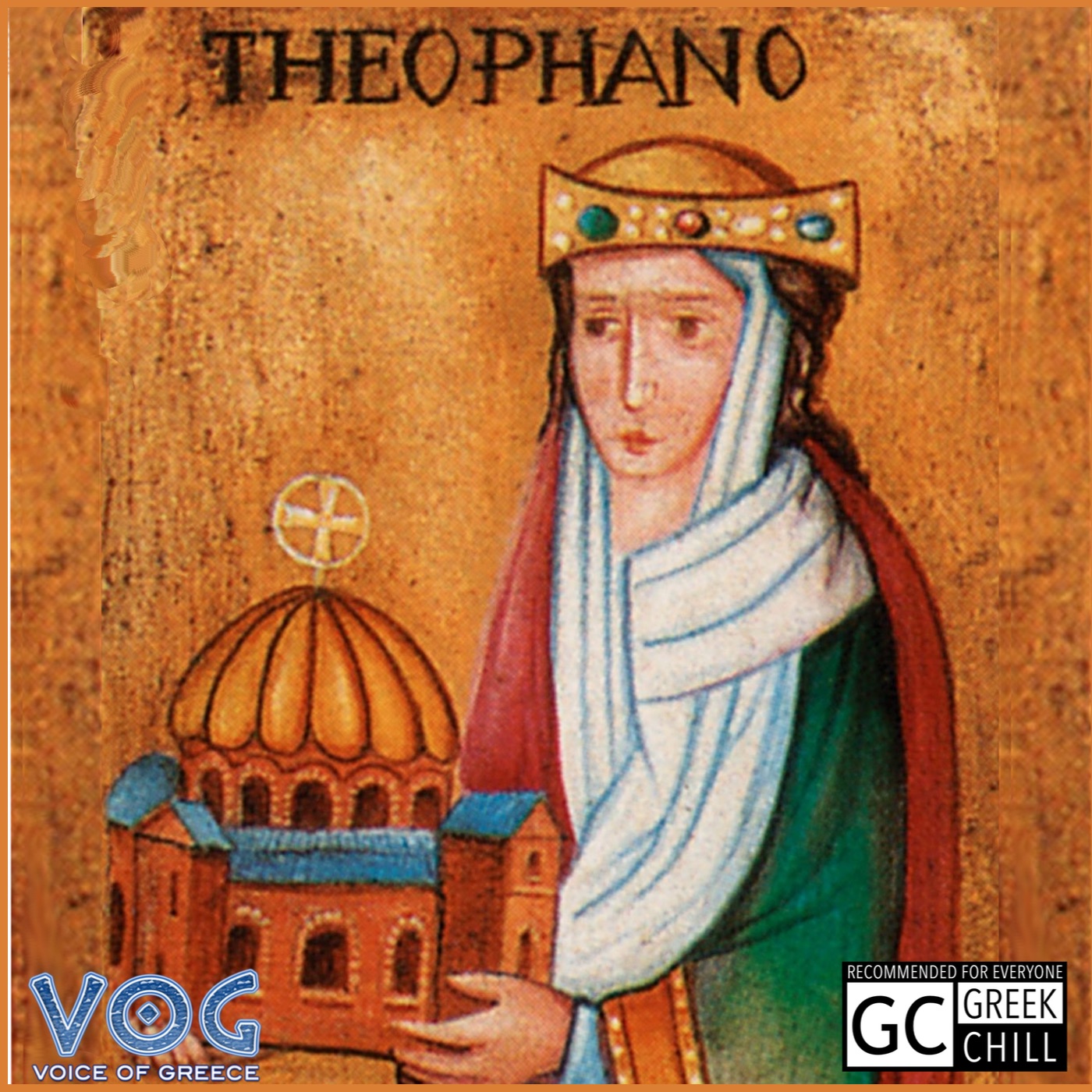
When we think of legendary Greeks, we usually picture men—Alexander the Great, Pericles, Odysseus etc. But Greek history is filled with remarkable women whose stories have been buried under centuries of “great man” history. This episode uncovers one of the most extraordinary: Theophanu Skleraina, the Byzantine princess who became Holy Roman Empress and ruled one of Europe’s most powerful empires.
Born around 960 into the Skleros family of Constantinople, Theophanu was raised in the sophisticated, politically charged atmosphere of the Byzantine court. At age 12, she was chosen for a diplomatic marriage to Otto II, son of Holy Roman Emperor Otto I, in a strategic alliance between East and West. Her journey from the glittering palaces of Constantinople to medieval Germany was more than a geographic relocation—it was a cultural union.
Arriving at the German court with her Byzantine silks, pearls, and sophisticated manners, she introduced a level of elegance and refinement that the Western nobility had never experienced. She brought exotic spices like cinnamon and nutmeg; popularized elaborate fashions, jewelry, and court ceremonies and elevated the entire culture of the Holy Roman Empire.
Theophanu was no mere decorative consort. Crowned as “co-empress”, she signed imperial documents, advised on policy, and accompanied Otto II on military campaigns. Their marriage, though politically arranged, became a genuine partnership. Together they had several children, including the future Otto III.
When Otto II died suddenly in 983, leaving their three-year-old son as emperor, Theophanu faced her greatest challenge. Rather than retiring to a convent or being sidelined by ambitious nobles, she claimed the regency and ruled the Holy Roman Empire for six years. She faced down rebellions and managed to keep the empire intact through diplomatic skill and strategic alliances.
During her regency, Theophanu continued her cultural mission, patronizing churches and monasteries, introducing Byzantine artistic and liturgical elements, and maintaining the sophisticated court culture she had established. She prepared her son for rule while simultaneously proving that a “foreign” woman could govern one of Europe’s most powerful realms with intelligence and authority.
Theophanu died in 991, leaving behind an empire that was not only politically stable but culturally enriched. Her son Otto III inherited both a throne and a vision of empire that blended Roman, German, and Byzantine ideals.
Join us as we explore the life of this remarkable woman who shaped the course of European history—one spice, one ceremony, and one brilliant political move at a time.
**Episode Length:** 17:31 minutes
References:
The Empress Theophano: Byzantium and the West at the Turn of the First Millennium
Marriage Charter of Empress Theophanu
Cultural depictions of Theophanu